A Real-World GLP-1 Study: Six-Month Outcomes in 8,127 Women

8,127 Women, Six Months: What New GLP-1 Research Found
A new real-world study published in Nature Medicine, titled “Real-world, digital-first delivery of GLP-1 receptor agonist therapy in women,” is putting women at the center of the GLP-1 conversation. Led by researchers at University College London (UCL), the observational cohort study followed 8,127 women ages 18 to 79 who initiated GLP-1 receptor agonist therapy through a structured digital program operated by SheMed and eMed Healthcare UK. Over six months, researchers assessed changes in body weight and metabolic health markers, as well as treatment retention and other measures.
The size and breadth of the cohort make the study particularly notable. Much of the existing GLP-1 research has enrolled predominantly male populations, despite women representing the majority of GLP-1 users in routine clinical care. Therefore, this study stands out as one of the largest real-world evaluations of GLP-1 therapy in women.
The Study at a Glance
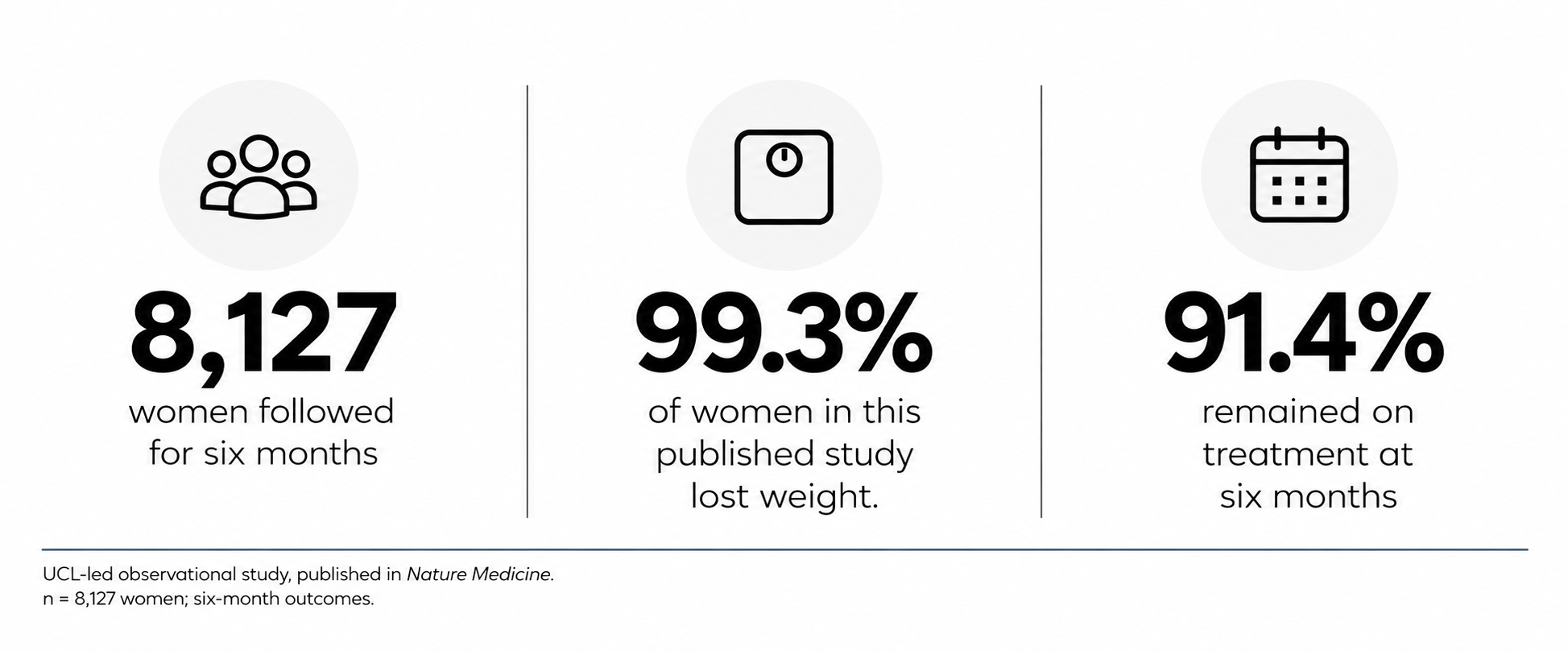
Over six months, researchers observed changes in body weight, HbA1c and lipid levels, while also examining treatment retention. The study also examined how weight-loss outcomes varied across age groups and socioeconomic backgrounds.
Participants completed at-home laboratory testing before treatment approval, weekly live video check-ins with supervised weight confirmation, monthly structured questionnaires and clinician-led monthly reviews. Dose adjustments were guided by individual response rather than automatic escalation. Throughout the program, a proactive structured side- effect mitigation package alongside nutrition and lifestyle educational content for GLP-1 therapy was available.
Program data were deidentified before being transferred to UCL where the research was led and independently analyzed. This real-world setting allowed researchers to examine outcomes as treatment was delivered in practice, complementing evidence from randomized clinical trials conducted under more controlled conditions.
What Researchers Observed After Six Months
At six months, participants had lost an average of 35.4 lb (16.1 kg), equivalent to 15.5% of their starting body weight.
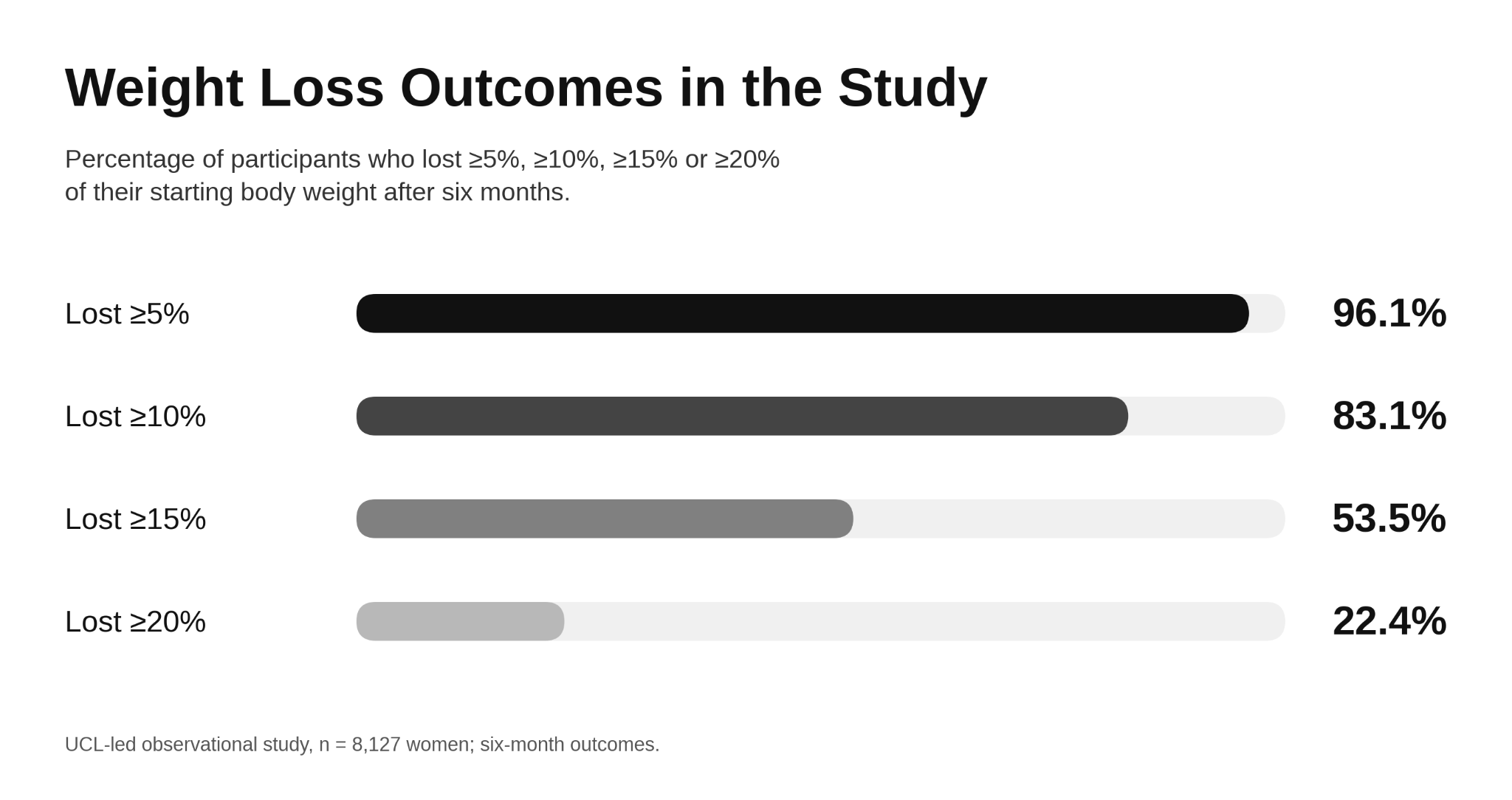
The timing of the weight loss was also notable. Fifty-eight percent of the total weight loss observed over six months took place during the first three months.
Treatment retention provided another measure of participants’ experience over the study period. At six months, 91.4% remained on treatment. Among participants who used the program’s structured side-effect support, 5.0% discontinued treatment compared with 7.4% among those who did not.
The Findings Extended Beyond Weight
Weight was only one of the measures researchers followed. Participants completed at home capillary blood testing before beginning treatment and again at six months. Among those who started with HbA1c (a test of your average blood sugar over 3 months) levels in the diabetes range, 84.5% had HbA1c values in the normal range at six months. Among participants who began with prediabetes, 96.3% had HbA1c values in the normal range at six months. These are laboratory values observed in this cohort, not a claim that the program treats or reverses diabetes or prediabetes.
Researchers also observed statistically significant changes in several lipid measures:
Total cholesterol: The overall amount of cholesterol in the blood, including LDL, HDL, and other cholesterol-carrying particles.
LDL cholesterol: Often called “bad” cholesterol because elevated levels can contribute to plaque buildup in the arteries and increase the risk of heart attack and stroke.
Triglycerides: A type of fat in the blood that stores excess energy from food. While very high levels may also increase the risk of pancreatitis.
● Total cholesterol decreased by 30 mg/dL (0.77 mmol/L).
● LDL cholesterol decreased by 24 mg/dL (0.61 mmol/L).
● Triglycerides decreased by 42 mg/dL (0.47 mmol/L).
Greater weight loss was also associated with greater improvements in some metabolic measures. Each additional 22.0 lb (10 kg) of weight loss was associated with a further 0.12 percentage points (1.3 mmol/mol) reduction in HbA1c and a 9 mg/dL (0.23 mmol/L) reduction in total cholesterol. These findings show improvements in laboratory markers associated with diabetes and cardiovascular health over six months.
Weight-Loss Outcomes Across Age Groups and Socioeconomic Strata
One of the notable findings was the consistency of weight-loss outcomes across the study's broad age range. Participants ranged from 18 to 79 years old. Women ages 60 to 79 lost an average of 14.8% of their starting body weight compared with 16.1% among women under 30.
The study also examined outcomes across different socioeconomic backgrounds, using the UK’s Index of Multiple Deprivation (IMD) as a measure of socioeconomic status. The study found that GLP-1 therapy was effective across all socioeconomic groups, suggesting that well-designed digital care may help reduce existing health inequities.
A Closer Look at Dosing and Side Effects
Clinicians reviewed participants monthly and adjusted dosing based on individual response and tolerability rather than automatically escalating to the maximum licensed dose. At six months, most participants had not needed the maximum licensed dose, with mean dose exposure at approximately 63% of the maximum. These findings offer a real-world look at response-guided titration and suggest that effective weight reduction may be achieved without escalation to higher doses.
Side effects were primarily gastrointestinal and were generally mild to moderate, aligning with the established safety profile of GLP-1 therapy. In program data, no serious treatment-related adverse events were reported.
What the Study Can't Tell Us
As an observational study without a comparison group, the research can identify outcomes and associations but cannot establish cause and effect. Follow-up was limited to six months, and the self-pay cohort was predominantly white and generally healthy with limited comorbidity, which may limit how broadly the findings can be applied. As the study included only female participants, the findings may not reflect how treatment responses differ by sex. Medical history and medication use were also self-reported. Longer-term research across more diverse populations will be important for understanding how these findings translate beyond this cohort.

What This Adds to the GLP-1 Conversation
As the need and demand for GLP-1 therapy continue to grow, particularly as a strategy to reduce the burden of obesity-related disease, healthcare systems face the challenge of delivering these treatments at scale. Many systems remain largely configured around traditional, in-person models of care, which can create barriers to timely and convenient access.
The study did not measure access to care, but digital care models may help expand access to GLP-1 therapy. Access to healthcare is an important social determinant of health (SDOH), referring to the social, economic, and environmental conditions that influence people’s health and their ability to obtain care. By reducing potential barriers such as geographic distance, transportation, and scheduling constraints, digital care models may help bridge gaps in healthcare access and make evidence-based obesity treatment more accessible to a broader population.
Beyond the Prescription: Supporting Better GLP-1 Care for Employers
For employers, this growing body of real-world evidence is helping shape a new approach to GLP-1 care. The UCL led study adds to the evidence on six-month treatment outcomes among thousands of women, while highlighting the importance of accessible, ongoing support beyond the prescription itself.
Importantly, these findings demonstrate the potential to deliver structured, digitally enabled obesity treatment at scale. Digital GLP-1 programs, such as eMed, can help bring this approach to more people by combining convenient access with clinical oversight and ongoing support. For employers, this provides a means to both scale and evaluate in real time, an evidence-based obesity treatment that supports their employees throughout their care journey.
Disclaimer: This blog is maintained by eMed for informational purposes only. Content published here does not constitute medical, legal, financial, or benefits advice and should not be relied upon as such. Third-party statistics, studies, and research cited are sourced from publicly available data and provided for general informational context only; eMed makes no representation as to their accuracy, completeness, or applicability to any specific employer population, and results may vary. eMed's GLP-1 program pairs FDA-approved, on-label medications with clinical oversight; individual health outcomes depend on a variety of clinical and personal factors and cannot be guaranteed. References in this article to investigational, compounded, or non-FDA-approved therapies, including peptides, are provided solely for educational discussion and do not constitute promotion, endorsement, a recommendation, or an offer of any such product. eMed’s GLP-1 program is limited to FDA-approved medications used on-label and does not include investigational or non-FDA-approved therapies. Any nutrition, protein, or exercise figures are general educational ranges, not individualized medical or dietary advice; consult a qualified healthcare provider before making any changes.
Any content contributed by eMed's Chief Medical Officer is provided in her personal capacity as a licensed physician for general informational purposes only. Such content does not constitute medical advice from eMed, establish a physician-patient relationship, or represent eMed's official clinical guidance. Readers should not act on any health-related information without first consulting a qualified healthcare provider.
Employers and individuals should consult qualified legal, benefits, and medical advisors before making plan design, coverage, or healthcare decisions. eMed assumes no liability for decisions made based on information contained in this blog.
Related articles